
Table of Contents
When most or all of the teeth in an arch can’t be saved, you have two main roads back to a full smile: a traditional removable denture, or a fixed arch of teeth anchored on dental implants — the approach known as All-on-4. Both can look excellent. Where they differ is in how they feel, how they function at dinner, and what they do to your jawbone over the following decades. Here’s an honest comparison.
Key Takeaways
- Traditional dentures rest on the gums and are removable; All-on-4 anchors a full arch of teeth on four strategically placed implants, fixed in place.
- Implant-supported teeth restore far more chewing power and don’t slip, click, or need adhesives.
- Implants stimulate the jawbone the way tooth roots do, slowing the bone loss that gradually reshapes a denture-wearer’s face and fit.
- Dentures cost less upfront; All-on-4 costs less to live with — fewer relines, remakes, and daily compromises over the years.
- Between the two sits a middle option: implant-supported overdentures, removable but anchored, often a strong value.
How Each One Works
A traditional denture is a removable acrylic arch that rests on your gums, held by suction and, often, adhesive. It comes out at night and for cleaning.
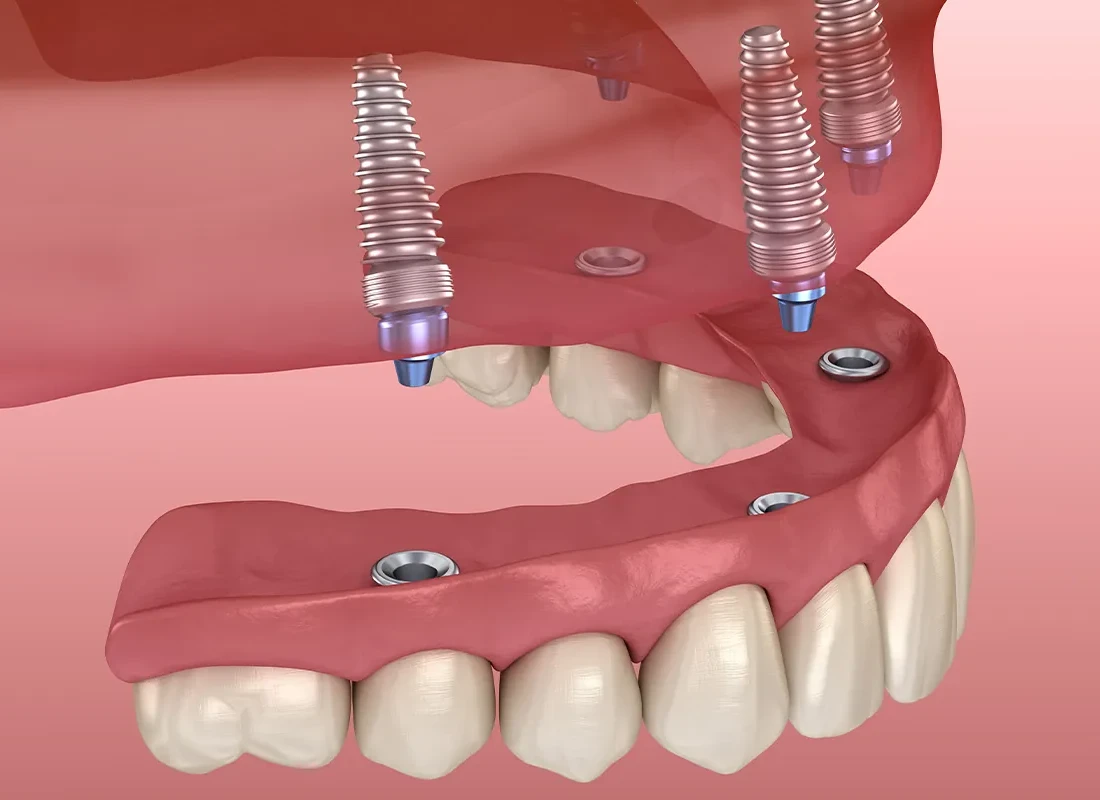
All-on-4 restoration takes a different approach: four implants are placed at engineered angles in the jaw, and a custom full-arch prosthesis is fixed onto them. It stays in around the clock and is cleaned like natural teeth, with professional maintenance at your hygiene visits. You wake up with your teeth already in place.
Eating, Speaking, and Everyday Confidence
This is where the two options truly diverge. Because a denture floats on the gums, it transmits only a fraction of natural bite force — many wearers quietly retire apples, crusty bread, and steak, and some find speech takes practice as the tongue negotiates the acrylic palate. An All-on-4 arch, anchored to the bone, restores most of your natural chewing power and leaves the palate uncovered, so food tastes better and speech feels normal. Nothing shifts when you laugh; nothing comes out at night.
The Bone Question Nobody Mentions
Tooth roots do a hidden job: every bite transmits pressure into the jawbone, which keeps that bone dense. When teeth go, the stimulation goes, and the bone slowly resorbs. This is why long-time denture wearers need periodic relines, why lower dentures get looser every few years, and why the lower face gradually takes on a sunken look.
Implants are the only replacement that restores that stimulation. The four posts of an All-on-4 arch act like anchoring roots, preserving the bone around them — protecting both the fit of your teeth and the structure of your face.
Cost, Honestly
A traditional denture wins on upfront price, and for some patients that rightly decides it. But the lifetime math is closer than it looks: dentures need relining every few years and remaking every five to ten as the bone changes, plus a lifetime of adhesives. An All-on-4 arch is a larger initial investment that then mostly just needs maintenance. We offer flexible financing to spread that investment into manageable monthly payments.
There’s also a middle road worth knowing about: implant-supported dentures, which snap onto two to four implants — removable like a denture, stable like an implant, and priced between the two.
Which One Is Right for You?
It comes down to your bone, your health, your priorities, and your budget — which is why this decision starts with imaging and an honest conversation, not a brochure. Dr. Chemla has spent three decades restoring implants and full arches, and will tell you plainly which options your anatomy supports and what each will be like to live with. Request a consultation at Beverly Hills Cosmetic Dentistry and get a recommendation built on your jaw, not a generic chart.