Table of Contents
Veneers can change a smile dramatically, but the enamel removed to place them does not grow back, so the decision is permanent.
Looking at a chipped, stained or uneven smile and wondering whether veneers would fix it? Veneers are the right choice when your teeth and gums are healthy, you do not clench or grind heavily and you know what you want to change. Because enamel is removed to place them, the decision has to be made before anything is bonded.
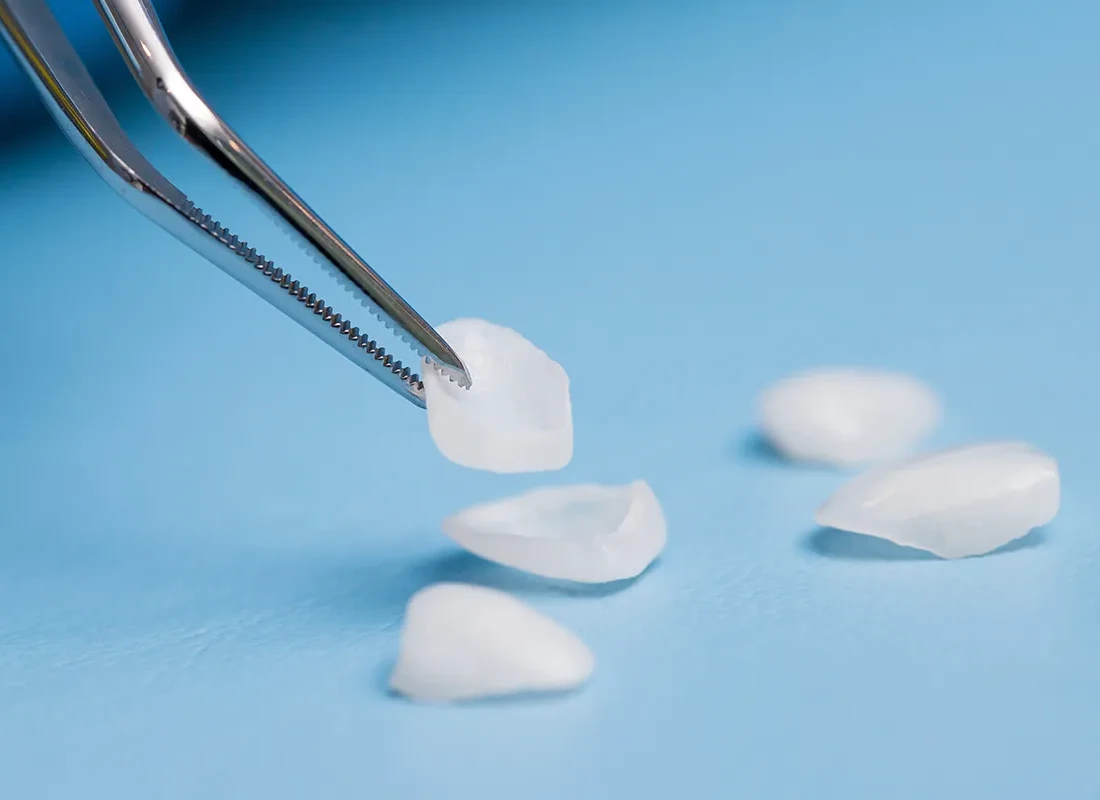
Porcelain veneers are thin, custom-made shells that cover the front surface of a tooth to change its color, shape or spacing. A dentist can tell you whether veneers are the right choice for your teeth after an exam, and the sections below show what that exam looks for.
Quick Answer
Veneers are the right choice when your teeth and gums are healthy, you do not clench or grind heavily and you know what you want changed. They cover only the front of a tooth, and the enamel removed to place them does not grow back. A dentist checks all of this at an exam.
Key Takeaways
- Veneers cover only the front of a tooth, while a crown covers the whole tooth.
- Enamel is removed to place a veneer, so the decision cannot be reversed later.
- Decay and gum disease need treatment first, because veneers over unhealthy teeth may worsen them.
- Clenching, grinding or a deep overbite can make veneers a poor choice for some people.
- Porcelain is strong and long lasting, while composite may need less enamel removed.
What Can Veneers Fix?
Veneers can improve teeth that are chipped or broken, stained, crooked or misshapen, and they can mask gaps between teeth. A thin shell bonded to the front surface changes how the tooth looks without rebuilding the rest of it. That is the main difference from a crown, which surrounds the entire tooth.
Surface stain, for example, often responds to whitening, which leaves the enamel intact. Veneers make more sense when the color problem sits deeper in the tooth, or when shape and spacing bother a person as much as shade does.
Who Makes a Good Veneer Candidate?
A good candidate starts with healthy teeth and gums. According to MouthHealthy from the American Dental Association, any decay or gum disease has to be treated first, because veneers placed over unhealthy teeth may worsen existing problems. Cavities can still form under or around a veneer, so brushing with fluoride toothpaste and cleaning between the teeth stay part of the routine.
Bite habits come next. Clenching, grinding or a deep overbite can make veneers a poor choice, because that kind of force stresses the veneer. A dentist can check for wear patterns that point to grinding, even when the person may not have noticed doing it.
What Is the Trade-Off With Veneers?
The biggest trade-off is permanence. Tooth enamel is removed to place a veneer, and enamel does not grow back, so the treatment is not reversible. A person who later wants the original tooth surface back cannot have it.
Veneers also need upkeep. A veneer may chip, crack, wear down or loosen over time, which means it may need to be re-bonded, repaired or replaced. Coffee, tea and red wine can discolor a veneer, and biting fingernails or chewing hard objects raises the risk of chipping.
Should the Veneer Be Porcelain or Composite?
A porcelain veneer is a thin shell custom-made to fit the front of the tooth. It is strong, long lasting and natural looking, and it tends to be the more expensive option. A composite veneer is built from tooth-colored filling material bonded to the tooth, and it may need less enamel removed and fewer visits.
The trade is durability against enamel. Porcelain lasts longer, while composite may keep more of the natural tooth. Composite resists stain and wear less well than porcelain, so it may need repair or replacement sooner. The right one depends on how many teeth are involved, how much change is wanted and how you feel about losing enamel.
What Does the Veneer Process Involve?
A lab-made veneer takes several steps, in a fixed order. The dentist removes a small amount of enamel from the front and sides of the tooth, then takes an impression or uses a scanner to build a 3D model. A dental technician makes the veneer from that model, and a temporary veneer may cover the tooth until the final one is ready.
At the fitting, the veneer is placed to check its shape and fit. After any adjustments, the teeth are cleaned and the veneer is bonded in place. The dentist also chooses a shade that matches the natural teeth.
The bite should feel normal afterward. Tell the dentist if the bite feels wrong so it can be corrected. Every step should be done by a licensed provider, because unlicensed providers may place veneers over unhealthy teeth, which risks infection and nerve damage.
What Should You Check Before Deciding?
A short checklist helps before you book. Are your teeth and gums healthy, with any decay or gum disease already treated? Do you clench or grind, or have a deep overbite? Can you picture the result, knowing a veneer has a fixed shape, length and shade once it is bonded? Are you comfortable with the fact that enamel is removed and does not return?
If any answer is uncertain, treat the problem first or ask about another option, such as whitening for surface stain. A dentist can tell you which applies to your teeth.
Frequently Asked Questions
How long do veneers last?
A veneer may chip, crack, wear down or loosen over time, so it may need to be re-bonded, repaired or replaced. Porcelain lasts longer than composite, which resists stain and wear less well. Avoiding fingernail biting and hard objects lowers the risk of chipping, and a dentist can tell you what to expect for your own teeth.
Does insurance cover veneers?
Coverage depends on your plan, and veneers are often considered cosmetic. The office can check your benefits, so you know what to expect before treatment starts. It can also give you an itemized estimate to compare against the plan.
Can veneers stain?
Veneers can discolor over time. Coffee, tea and red wine are common causes, and composite resists stain less well than porcelain. Limiting dark drinks and keeping up with brushing and cleaning between the teeth helps protect the shade, and a dentist can advise on repair or replacement if a veneer changes color.
Related Reading
- Why Does My Veneer Color Look Different in Photos vs. the Mirror?
- What Is a Smile Makeover and Who Is It Right For?
About the Author
This post was reviewed by Dr. Marc Chemla, DDS, who earned his Doctor of Dental Surgery at the University of Southern California, Herman Ostrow School of Dentistry, and a doctorate degree at Marseille Schools of Dentistry in France. He practices cosmetic and general dentistry and is a member of the American Dental Association and California Dental Association.
- If you want to learn more about veneers, visit our Porcelain Veneers in Beverly Hills, CA, page or schedule a consultation.