
Table of Contents
Few phrases make patients flinch like “you need a root canal.” The procedure has carried a scary reputation for generations — and that reputation is decades out of date. Here is the truth: with modern anesthetic and technique, root canal treatment in Beverly Hills feels about like getting a filling. The pain people remember isn’t the treatment. It’s the infected tooth before treatment — and the root canal is what makes that pain stop.
Key Takeaways
- A root canal removes infected or damaged pulp from inside the tooth, relieving the pain and saving the tooth instead of extracting it.
- The procedure is done under complete local anesthesia — most patients feel pressure and vibration, not pain.
- The severe pain associated with root canals comes from the infection beforehand; treatment is the relief, not the cause.
- Mild soreness for a few days afterward is normal and usually managed with over-the-counter medication.
- Saving your natural tooth is almost always better — and less expensive over time — than extracting and replacing it.
Why a Tooth Needs a Root Canal
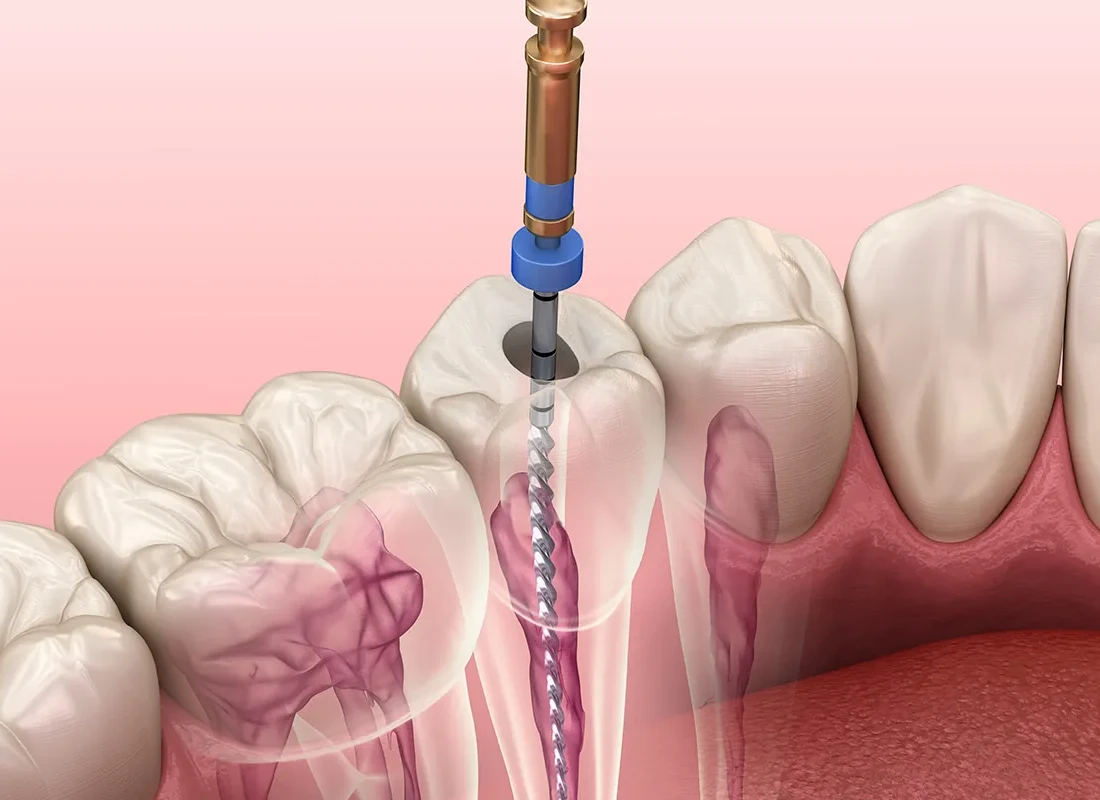
Inside every tooth is a small chamber of soft tissue — the pulp — carrying the tooth’s nerve and blood supply. When deep decay, a crack, or trauma lets bacteria reach that chamber, the pulp becomes inflamed and then infected. That is the throbbing, keep-you-up-at-night toothache patients describe, and it will not heal on its own. At that point there are only two honest options: clean out the infection and save the tooth, or remove the tooth entirely.
What Actually Happens, Step by Step
First, the tooth is completely numbed — and we don’t begin until it is. Patients with dental anxiety can also add sedation options so the appointment passes in a calm blur.
Through a small opening in the top of the tooth, the infected pulp is removed and each root canal is cleaned, disinfected, and shaped — this is where precision matters, and where rotary instruments and digital imaging have transformed the experience. The canals are then sealed with a biocompatible filling material, and the tooth is closed with a temporary or permanent restoration. Most treatments take one to two visits of about an hour each.
Because the nerve is fully anesthetized, what you actually feel during the procedure is pressure, vibration, and your own suspense — which, patients tell us, evaporates about ten minutes in.
What Recovery Feels Like
Expect the area to feel a little sore or bruised for two or three days, especially when chewing — the tissues around the root need time to settle. Over-the-counter ibuprofen or acetaminophen handles it for the vast majority of patients. What you should notice immediately is the absence of the deep, throbbing infection pain. That relief is the point.
Most root-canal-treated back teeth then need a porcelain crown to protect the now-hollow structure from cracking. Skipping the crown is the most common reason a successfully treated tooth later fails, so we plan it as part of the treatment, not an afterthought.
Why Saving the Tooth Beats Pulling It
Extraction can seem simpler in the moment, but the empty space costs you later: neighboring teeth drift, chewing shifts to other teeth, and replacing the gap with a dental implant or bridge is a longer and costlier road than a root canal and crown. Nothing we can make is quite as good as the tooth you grew — which is why saving it is almost always plan A.
Don’t Wait Out a Toothache
An infected tooth only gets worse, and waiting narrows your options. If you have lingering sensitivity to heat, pain when biting, or a toothache that wakes you at night, request an appointment at Beverly Hills Cosmetic Dentistry — we offer emergency care seven days a week, and relief is usually one calm, numb, surprisingly boring visit away.